Key Developments from the Solar Industry News
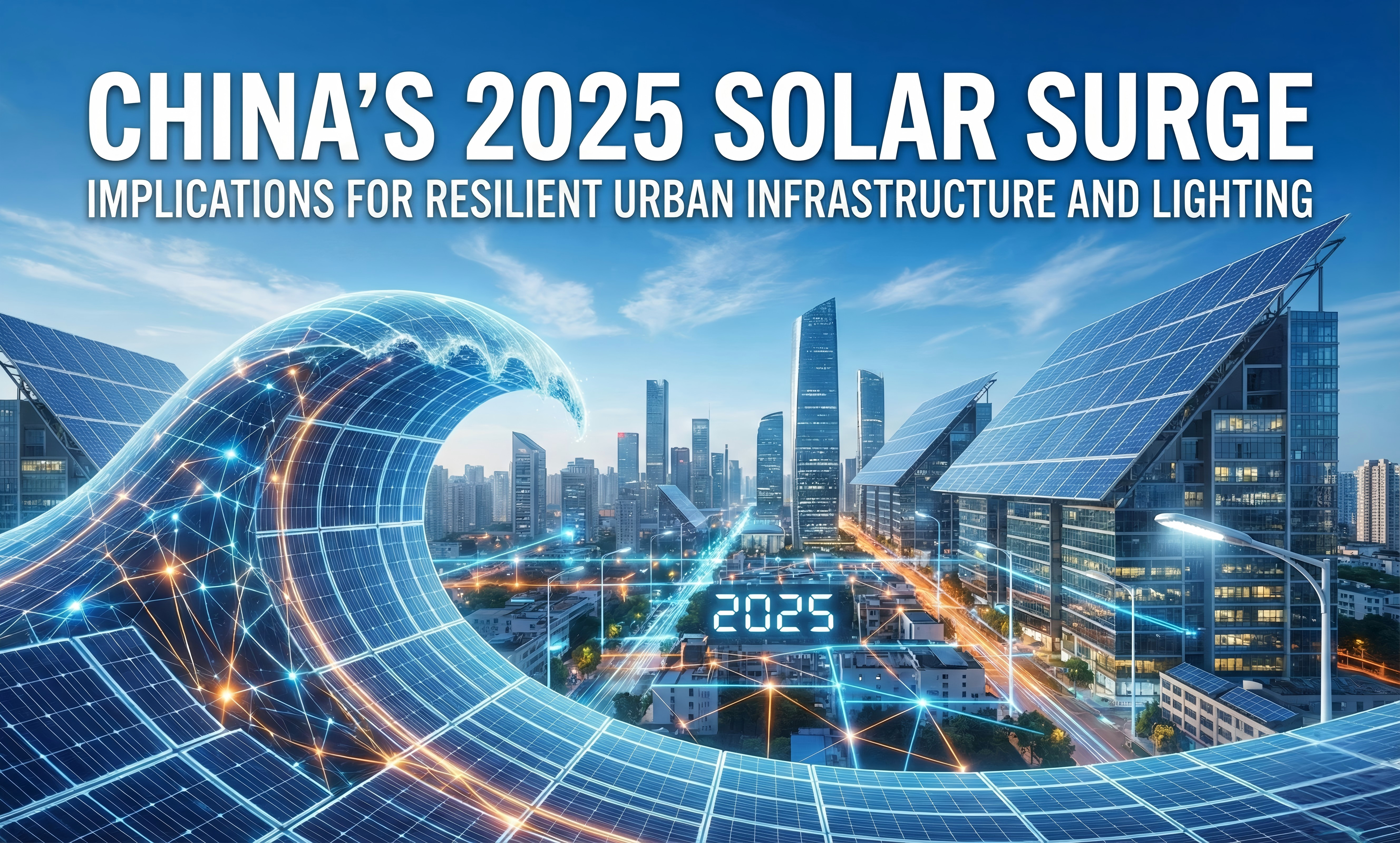
Recent data regarding China's energy sector confirms an unprecedented acceleration in photovoltaic deployment. In 2025 alone, China added over 300 GW of new solar capacity, bringing its cumulative total to over 1,000 GW.
Key data points relevant to infrastructure include:
- Scale of Deployment: China now accounts for roughly two-thirds of global solar installations.
- Sector Distribution: Growth is driven not just by utility-scale farms, but significantly by distributed rooftop projects and rural expansion.
- Global Leadership: This surge cements China's role as the primary driver of global renewable energy capacity, influencing supply chains worldwide.
Industry Interpretation and Secondary Impacts
From an industrial and manufacturing perspective, this news signifies more than just environmental progress; it indicates a fundamental shift in the Levelized Cost of Energy (LCOE) for solar-based infrastructure.
The addition of 300 GW in a single year suggests a massive maturation of the upstream supply chain—specifically in polysilicon production and module assembly. For infrastructure planners and EPC contractors, this massive supply capability creates a "deflationary pressure" on component costs.
Implication: The "install solar panels cost" metric is breaking out in search trends for a reason. As global supply increases to meet China's domestic demand, the cost-per-watt for high-efficiency photovoltaic modules drops globally. This makes solar-integrated infrastructure—specifically solar street lighting and smart poles—economically viable in regions where it was previously considered too expensive compared to grid extension.
Implications for Urban and Public Lighting Infrastructure
The news specifically highlights "rural expansion." This aligns with a global trend we observe in infrastructure development: the decentralization of critical assets.
Rural Road Networks: The push for 300 GW includes massive distributed generation. For rural highways and secondary roads, this validates the shift toward all-in-one solar street lights. With module costs falling due to mass production, high-lumen, high-automatic solar lighting is now feasible for thousands of kilometers of rural roadways without requiring expensive copper cabling or transformers.
Grid Stability and Smart Poles: The injection of 1,000 GW of variable solar energy into the grid creates load-balancing challenges. Cities must now prioritize off-grid or hybrid public assets. Solar street lights provide essential services (lighting, surveillance) without drawing from the grid during peak evening hours, effectively aiding grid stability.
Industrial Zones: As industrial parks aim to meet carbon neutrality targets, the integration of solar lighting is no longer just a CSR initiative; it is a CAPEX reduction strategy driven by the lower cost of solar components.
Manufacturer Perspective: Engineering for the "Gigawatt Era"
As a dedicated manufacturer of solar street lights and smart pole solutions, we analyze these macro-trends to inform our system engineering and project recommendations.
The 2025 solar surge in China directly impacts how we design systems for our global clients:
Oversizing is the New Standard: With PV module costs decreasing (a byproduct of the 1,000 GW capacity drive), we can now engineer solar street lights with significantly "oversized" panels relative to the battery and LED load.
Practical Benefit: This allows our systems to reach full battery charge even on cloudy days or in high-latitude regions, addressing the primary concern of reliability.
Smart Pole Integration: The savings achieved on the solar generation components are being redirected into smart city features. In recent projects, we have seen municipalities utilize the budget surplus—created by falling solar costs—to upgrade from standard solar lights to smart poles equipped with environmental sensors and 5G small cells.
Rural Deployment Experience: In our recent rural electrification projects, the "rural expansion" trend mentioned in the news is visible on the ground. We are deploying split-type solar street lights that utilize higher-wattage commercial panels (similar to those used in the 300 GW utility surge) to provide laboratory-grade illuminance on unlit country roads.
Technology and Product Direction Aligned with the Trend
The industry trajectory suggests a move toward high-density integration.
Module Efficiency: The technology driving China's 1,000 GW capacity is trickling down to street lighting. We are moving toward N-Type TOPCon and HJT (Heterojunction) solar cells for our lighting fixtures. These offer higher efficiency per square meter, allowing for slimmer, more wind-resistant pole designs without sacrificing power generation.
Solar and Wind Hybrid Systems: As solar penetration increases, "Hybrid" solar street lights (wind + solar) are evolving. Future controllers will not just switch to the grid when the battery is low; they will intelligently manage energy based on real-time electricity pricing, leveraging the very volatility created by the renewable energy boom.
FAQs about the China Solar Industry
How does the 300 GW solar surge in China affect the cost of solar street lights globally?
The massive scale of production required to add 300 GW of capacity drives down the manufacturing cost of photovoltaic modules. Since the solar panel is a major cost component of a solar street light, this trend generally leads to lower upfront equipment costs or higher specifications for the same price.
What is the relevance of "rural expansion" in the news to municipal lighting?
Rural expansion indicates a maturing supply chain for distributed energy. For municipalities, this means off-grid solar street lighting is becoming the standard solution for rural roads, eliminating the prohibitive cost of trenching cables to remote areas.
Are "smart poles" becoming more affordable due to these trends?
Yes. As the cost of the base energy generation (solar panels and batteries) decreases, a larger portion of the project budget can be allocated to "smart" components like IoT controllers, CCTV, and environmental sensors, improving the ROI of smart pole projects.
Does the increase in solar capacity impact the reliability of solar street lights?
Indirectly, yes. The improved technology and lower costs allow manufacturers to use higher-efficiency panels and larger batteries in standard products. This "oversizing" significantly improves reliability during poor weather conditions compared to older generations of solar lights.
Post time: Feb-05-2026


